
How to Source Custom Metal Castings: A Complete Guide for Engineers
Introduction
Finding the right metal casting foundry for custom parts can feel like navigating a complex technical challenge. Engineers, sourcing managers, and maintenance professionals often spend weeks evaluating foundries, comparing capabilities, and trying to communicate specifications clearly—only to receive inaccurate quotes or discover mid-project that the foundry cannot meet their requirements. The stakes are high: production delays, quality issues, and cost overruns can cascade into significant business problems.
This guide cuts through the complexity and provides a structured approach to sourcing custom metal casting services. Whether you need rapid prototyping casting for a new product development cycle, low volume metal casting for specialized equipment, or legacy part replication to restore discontinued components, understanding the foundry selection process will help you make informed decisions and avoid costly mistakes. One Off Castings, located in Jonesboro, Arkansas, brings 45 years of combined experience from the Southern Cast Products legacy to serve engineers and manufacturers across diverse industries.
What to Look for in a Casting Foundry
Selecting a metal casting foundry requires evaluating multiple factors beyond simply comparing prices. The right partner will impact your product quality, timeline, and total cost of ownership. Understanding what separates exceptional foundries from average ones ensures you make a choice that supports your long-term success.
Technical Capabilities and Equipment
The scope of a foundry's capabilities determines what projects they can handle effectively. Examine the casting methods they offer, the materials they work with, and the size ranges they can accommodate. A foundry with diverse capabilities provides flexibility as your needs evolve, eliminating the need to establish new supplier relationships when requirements change. Look for facilities that invest in modern equipment and maintain clean, organized production environments—this often correlates with consistent quality and operational discipline.
Quality Certifications and Standards
Certifications serve as objective indicators of a foundry's commitment to quality and process control. ISO 9001 certification demonstrates implemented quality management systems, while industry-specific certifications like AS9100 for aerospace or IATF 16949 for automotive show deeper commitment to specialized requirements. ASTM standards govern material specifications and testing procedures, so foundries should demonstrate familiarity with relevant standards for your application. Request copies of their most recent audit reports and understand any non-conformance findings and how they were addressed. A transparent foundry will readily share this information and discuss their quality processes openly.
Engineering Support and Technical Expertise
The best casting foundries function as partners rather than simply manufacturers. Engineering support during the quoting phase can improve part design for manufacturability, reducing costs and improving quality. Look for foundries with experienced metallurgists and casting engineers on staff who can review designs, recommend modifications, and explain process limitations. This expertise becomes particularly valuable for complex geometries, unusual alloys, or projects requiring rapid prototyping casting where iterative design improvements accelerate development timelines.
Production Capacity and Lead Times
Understand the foundry's typical lead times and production capacity before committing to a relationship. Some foundries specialize in high-volume production while others focus on custom, low-volume work. If your needs include legacy part replication or intermittent production runs, confirm the foundry can accommodate these patterns without excessive minimum order requirements or long lead times for small batches. Flexibility in scheduling often indicates a foundry well-suited to custom and prototype work.
The 4 Most Common Casting Methods Explained
Understanding casting methods enables more productive conversations with foundries and helps you select the most appropriate process for your application. Each method offers distinct advantages and limitations that affect part quality, cost, and production timeline.
Sand Casting
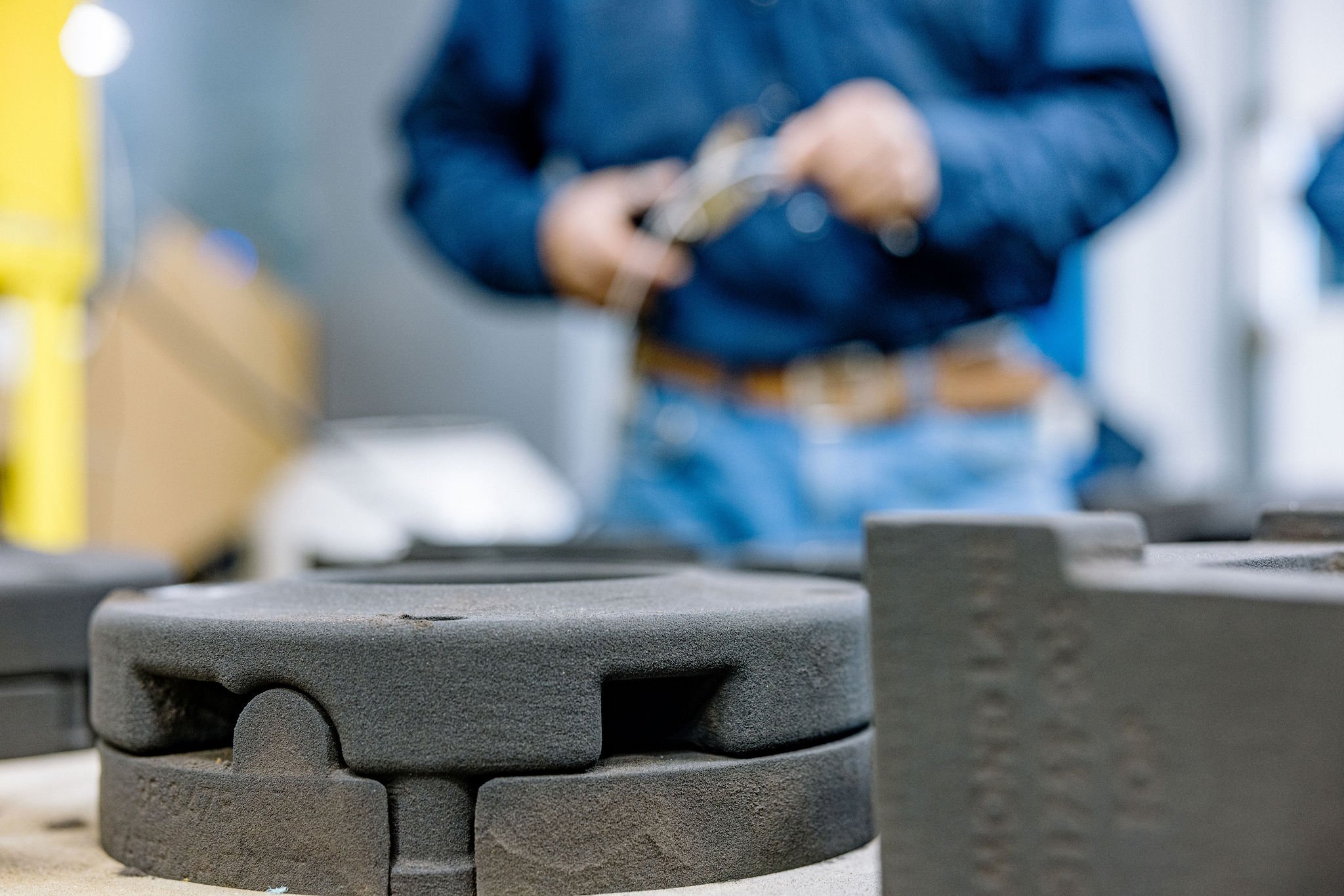
Sand casting remains the most versatile and widely used metal casting process, particularly for low volume metal casting and custom parts. The process involves creating a mold from compacted sand, pouring molten metal into the cavity, and allowing it to solidify before breaking out the finished part. Modern sand casting incorporates advanced technologies like 3D sand printing for complex geometries, which eliminates the need for physical patterns and accelerates tooling development.
This method accommodates a wide range of alloys including aluminum, bronze, iron, and steel. Part sizes can range from a few ounces to several tons, making sand casting suitable for everything from small custom components to large industrial machinery parts. The relatively low tooling cost and quick turnaround make it ideal for prototyping and production volumes where expensive dedicated tooling would not be economical. Lead times for sand casting typically range from 2-6 weeks depending on complexity and foundry scheduling, with rapid prototyping options available for time-sensitive projects.
Investment Casting
Investment casting, also known as lost-wax casting, produces parts with excellent surface finish and dimensional accuracy. The process creates a ceramic shell around a wax pattern, then melts out the wax and fills the cavity with metal. This method excels at producing complex geometries with thin walls and intricate details that would be difficult or impossible to achieve with other casting methods.
Parts from investment casting often require minimal machining, reducing secondary operations and associated costs. The process works well with a variety of alloys including stainless steel, carbon steel, and exotic alloys for high-temperature applications. However, investment casting involves higher tooling costs and longer lead times than sand casting, making it most suitable for production volumes that justify the initial investment or applications where the quality requirements outweigh cost considerations.
Die Casting
Die casting uses high pressure to force molten metal into reusable steel dies, producing high-volume parts with excellent dimensional consistency and surface finish. This method excels at aluminum and zinc components for automotive, consumer goods, and electronics applications. The high initial tooling cost limits die casting to higher production volumes where the per-part cost advantage justifies the upfront investment.
Cycle times in die casting are very short, often measured in seconds, enabling high throughput once dies are produced. The process produces parts with tight tolerances and good strength characteristics, though the high initial cost and long tooling lead time make it unsuitable for low-volume or prototype applications. Die casting is primarily used for production volumes in the thousands to millions of units.
Continuous Casting
Continuous casting produces long sections of metal—billets, blooms, or slabs—that are later machined into finished parts. This method is primarily used by metal producers rather than foundries making finished castings, though it affects material availability and pricing for all casting methods. Understanding continuous casting helps engineers appreciate material flow and the relationship between casting processes and raw material supply chains.
Casting Methods Comparison Table:
Casting MethodBest ForTypical Lead TimeTooling CostSurface FinishDimensional AccuracySand CastingLow volume, large parts, prototypes2-6 weeksLowGoodModerateInvestment CastingComplex geometries, high precision4-8 weeksHighExcellentHighDie CastingHigh volume production8-12 weeksVery HighVery GoodHighContinuous CastingMaterial production for machiningN/AN/AN/AN/A
How to Get Accurate Quotes Faster
The quote request process often determines how quickly you can move projects forward. Understanding what information foundries need and presenting it clearly improves quote accuracy and reduces back-and-forth communication that extends timelines.
Prepare Complete Technical Documentation
Providing comprehensive technical documentation from the start eliminates the most common cause of quote delays. Include 3D CAD files in neutral formats like STEP or IGES, along with 2D drawings specifying all dimensions, tolerances, and critical features. Clearly identify critical dimensions that must meet tolerance requirements versus nominal dimensions where some variation is acceptable. Specify the required material grade or chemistry, and if multiple material options are acceptable, indicate this in order of preference.
Quantify your quality requirements including any testing or inspection needs. Specify surface finish requirements using standard Ra or Rz values rather than qualitative descriptions like "smooth" or "machined appearance." Indicate production quantity requirements including any anticipated repeat orders, as this information affects tooling decisions and pricing structure. If you need legacy part replication, provide original part samples or documentation if available.
Understand Quote Components and Timing
Custom casting quotes typically include material costs, labor and processing costs, tooling costs for patterns or dies, and any testing or certification costs. Material costs fluctuate with commodity prices, so quotes may include validity periods or material adjustment clauses. Tooling costs vary dramatically between methods—sand casting requires patterns while investment casting requires dies and shells, with costs reflecting this difference.
Typical quote turnaround times range from 3-10 business days depending on complexity and foundry workload. Simple inquiries with complete documentation may receive responses faster, while complex projects requiring engineering review or material sourcing may take longer. When time is critical, explicitly communicate your timeline requirements and ask about expedited quote options. Many foundries offer priority processing for rapid prototyping casting requests when project schedules demand fast turnaround.
Ask the Right Questions
When evaluating quotes, ask questions that reveal more than just bottom-line pricing. Inquire about the foundry's experience with your material and application. Ask what process they recommend and why, as this reveals their technical approach. Request information about their quality processes, testing capabilities, and typical rejection rates. Understand their communication protocols during production and who will serve as your point of contact. These factors often matter more than small price differences when projects encounter challenges.
BUTTON: Request Your Free Quote
Red Flags to Avoid When Selecting a Foundry
Vetting foundry partners carefully prevents problems that emerge too late in the process. Recognizing warning signs during initial conversations and evaluation phases helps you avoid costly supplier failures.
Communication and Transparency Issues
Difficulty getting clear answers during the quote process often predicts ongoing communication problems during production. If a foundry is unresponsive, provides vague information, or seems reluctant to share details about their processes, this pattern will likely continue after you become a customer. Watch for evasiveness regarding certifications, quality metrics, or facility capabilities. Reputable foundries proudly share their credentials and discuss their quality systems openly.
Be cautious of quotes that seem significantly lower than other quotes you receive. Extremely aggressive pricing may indicate the foundry does not fully understand your requirements, plans to cut corners on quality, or will later request price adjustments. Quality problems and production delays often follow unrealistically low prices, ultimately costing more than paying fair market rates initially.
Process and Capability Gaps
Foundries that cannot clearly explain their capabilities or provide references for similar work should raise concerns. If a foundry claims to handle your project type but cannot discuss relevant experience or provide customer references, they may be overstating their capabilities. Similarly, be wary of foundries that seem to agree to all requirements without asking questions—thorough engineering review requires understanding tradeoffs and constraints, and foundries that never raise concerns may not be conducting proper technical review.
Excessive minimum order quantities or reluctance to accommodate low volume metal casting requests may indicate a foundry focused on different market segments. If your needs include prototype work, legacy part replication, or variable production volumes, confirm the foundry's flexibility before committing. The wrong foundry for your volume profile will create ongoing friction regardless of their capabilities for other project types.
Why Choose One Off Castings
One Off Castings brings distinctive capabilities to engineers and manufacturers seeking custom metal casting services. Our Jonesboro, Arkansas facility combines decades of foundry expertise with modern technology to serve diverse industry needs.
A Legacy of Casting Excellence
Our team includes professionals with 45 years of combined experience from Southern Cast Products, giving us deep knowledge of casting processes, material behavior, and production challenges. This experience spans industries including industrial equipment, agriculture, automotive, and custom manufacturing. We understand the practical realities of casting production and apply this knowledge to help engineers succeed, whether developing new components or replicating discontinued parts.
Comprehensive Capability Range
We offer sand casting, 3D sand printing for complex geometries, and full-service machining for finished components. Our rapid prototyping casting services accelerate development timelines, while our legacy part replication capabilities help customers maintain aging equipment without expensive re-engineering. Whether you need a single prototype or low volume production, we provide the flexibility that custom applications require. Our engineering team reviews every project, providing technical guidance that improves manufacturability and reduces costs.
Domestic Production and Supply Chain Security
All production occurs in our Jonesboro, Arkansas facility, providing supply chain visibility and reliability that overseas sourcing cannot match. Domestic production eliminates extended lead times, communication barriers, and quality control challenges associated with international suppliers. Our location positions us to serve customers throughout North America with efficient logistics and responsive service.
Frequently Asked Questions
What is the metal casting process?
The metal casting process involves creating a mold cavity in the shape of the desired part, then filling that cavity with molten metal that solidifies into the final component. The mold can be created from various materials including sand, metal, or ceramic depending on the casting method. Once the metal cools and solidifies, the part is removed, cleaned, and may undergo secondary operations like machining or heat treatment. Casting enables production of complex geometries that would be difficult or impossible to create through other manufacturing methods, and it accommodates virtually any metal alloy that can be melted and poured. The process has been refined over thousands of years and today incorporates advanced technologies like 3D printed molds, computer-aided process simulation, and automated quality inspection.
How long does custom casting take?
Custom casting lead times vary significantly based on the method, complexity, and foundry workload. Simple sand casting prototypes can be produced in 2-4 weeks when patterns already exist or can be created quickly. New pattern development for sand casting typically adds 2-3 weeks to the timeline. Investment casting requires more extensive tooling development, usually adding 4-6 weeks for new patterns and dies. Production orders after initial tooling typically ship within 2-4 weeks for most methods. Expedited options may be available for time-sensitive projects, particularly with rapid prototyping casting services that leverage 3D printing technology to eliminate physical pattern lead times.
What certifications should a foundry have?
Foundry certifications demonstrate commitment to quality systems and process control. ISO 9001 certification indicates a documented quality management system with regular internal and external audits. Industry-specific certifications like AS9100 (aerospace), IATF 16949 (automotive), or NADCAP (defense) show deeper capability in regulated industries. ASTM certification ensures materials meet specified chemistry and property requirements. Request audit reports and discuss any non-conformance findings. The appropriate certifications depend on your industry and application—evaluate certifications in context of your specific requirements rather than simply counting certificates.
Can you replicate legacy parts that are no longer available?
Yes, legacy part replication is a core capability for custom casting foundries. The process typically begins with examining original parts or documentation to understand the component's function and requirements. Engineers reverse-engineer the part, creating CAD models and determining appropriate material specifications. Casting methods are selected based on the original part's construction and your requirements. The result is a new casting that matches the original part's form, fit, and function. This service is invaluable for maintaining industrial equipment, vintage vehicles, and specialized machinery where replacement parts are no longer commercially available.
What information do I need to provide for an accurate quote?
Provide 3D CAD files in STEP or IGES format, 2D drawings with dimensions and tolerances, material specifications or preferred alloys, quantity requirements including anticipated future volumes, quality requirements and testing needs, and any delivery timeline constraints. If you have original parts for legacy replication, provide those along with any available documentation. The more complete your information, the more accurate and actionable your quote will be.
What materials can be cast?
Virtually any metal alloy that can be melted and poured can be cast. Common casting alloys include aluminum (356, 319, A356), bronze (C932, C954, aluminum bronze), gray iron, ductile iron, and carbon and alloy steels. Specialty alloys including stainless steels, tool steels, and high-temperature alloys are also castable. Material selection depends on application requirements including strength, corrosion resistance, temperature capability, and cost. Your foundry's metallurgists can recommend appropriate alloys based on your performance requirements and budget constraints.
How do I ensure casting quality for critical applications?
Establish quality requirements clearly in your procurement documentation and discuss inspection and testing protocols with your foundry before production. Request material certifications confirming chemistry and mechanical properties. Specify non-destructive testing requirements such as magnetic particle inspection, radiographic testing, or penetrant inspection based on your application. Discuss dimensional inspection procedures and tolerance verification. For critical applications, consider source inspection rights and first-article approval processes. Establish clear quality escalation procedures if issues are identified. Building quality into the process through proper design review and process control is more effective than inspecting defects into finished parts.
BUTTON: Contact Our Engineering Team
Ready to Source Your Next Casting Project?
Sourcing custom metal castings effectively requires understanding casting methods, evaluating foundry capabilities, and communicating requirements clearly. By following the principles outlined in this guide, you can identify foundry partners that will support your projects successfully and avoid the common pitfalls that lead to quality problems and schedule delays.
One Off Castings combines 45 years of foundry expertise with modern capabilities to serve engineers and manufacturers across diverse industries. From rapid prototyping casting that accelerates development timelines to legacy part replication that extends equipment life, our team provides the technical expertise and production flexibility that custom applications require. Our Jonesboro, Arkansas facility delivers domestic production with responsive service and competitive pricing.
Get started today by requesting a quote for your custom casting project. Our engineering team will review your requirements, provide technical guidance, and deliver a competitive quote within our standard timeframe.
BUTTON: Get Started Today
Look at are other foundry Southerncast Products