

Low Volume Metal Casting Services | Short Run Foundry | One Off Castings
Your Fast-Track Partner for One-Offs, Prototypes & Short Run Castings
Based in Northeast Arkansas, One Off Castings specializes in low volume metal casting from 1 to 500+ units. From single prototypes to small batch production, we deliver precision castings in steel, iron, aluminum, and stainless steel with fast 2-6 week turnaround.
Buttons:
Request a Quote
View Our Capabilities
What Is Low Volume Metal Casting?
Low volume metal casting refers to the production of metal parts in quantities ranging from 1 to 500+ units. This manufacturing process is ideal for prototypes, replacement parts, and limited production runs where traditional mass production methods like die casting are not cost-effective.
Unlike high volume production requiring expensive permanent tooling, low volume casting utilizes 3D sand printing, robocasting, and traditional pattern tooling to produce quality castings without significant upfront investment. This approach is perfect for:
Product development and validation stages
Legacy machinery parts no longer available from OEMs
Limited edition equipment runs
Bridge production while permanent tooling is being developed
Custom or specialized industrial applications
Why One Off Castings for Low Volume Production?
🚫 No Minimum Order Quantity
Unlike many foundries, we welcome single-part orders. Whether you need 1 prototype or 100 production parts, we deliver the same attention to quality and detail.
⚡ Fast Turnaround (2-6 Weeks)
Our advanced 3D sand printing and robocasting technology accelerates mold production, reducing lead times compared to traditional foundry methods.
🔬 Full Range of Engineering Alloys
We pour more materials than most prototype casters: gray iron, ductile iron, carbon steel, stainless steel, and aluminum—all ASTM certified.
🏭 Complete In-House Capabilities
From engineering and simulation to pouring, heat treatment, and inspection—everything happens under one roof for seamless quality control.
📐 Reverse Engineering Expertise
Lost your original drawings? Our 3D scanning technology can recreate castings from physical samples, even for obsolete or unavailable parts.
✅ Certified Quality Assurance
In-house LPI and MPI inspection, spectrometers for material verification, and tensile bar testing ensure consistent, traceable quality.
Metals Available for Low Volume Casting
We pour a comprehensive range of engineering alloys to meet your specific application requirements:
Gray Iron Alloys
ASTM A48 (Class 25-40 A or B)
ASTM A278 (Class 25-40 A or B)
ASTM A436 (N1B)
Ductile Iron Alloys
ASTM A536 (100-70-03, 65-45-12, 60-40-18)
ASTM A439 (D2)
Carbon & Alloy Steel
ASTM A216 (WCB, WCA, WCC)
ASTM A352 (LCB)
Stainless Steel
ASTM A351 (CF3M, CF8M)
ASTM A487 (CA6NM, CA15)
ASTM A890 (CD4MCuN)
Aluminum Alloys
ASTM B26 (319, C355, A356)
In-house aluminum heat treatment
Complete Low Volume Casting Capabilities
3D Sand Printing
Intricate molds with unmatched design flexibility. No patterns required for complex geometries.
Robocasting
Advanced patternless casting with customization capabilities for rapid iteration.
Custom Patterns & Tooling
Aluminum patterns built for longevity when repeat orders are anticipated.
CNC Machining
Precision machining for exacting specifications, finishing castings to print.
Heat Treatment
Full in-house heat treatment department for optimal mechanical properties.
Quality Inspection
LPI, MPI, spectrometers, and tensile testing for 100% certified results.
Industries We Serve
One Off Castings provides low volume metal casting solutions for diverse industrial applications:
Oil & Gas Equipment
Agricultural Machinery
Pump & Valve Manufacturers
Mining Equipment
Power Generation Components
Hydraulic & Pneumatic Systems
Food Processing Equipment
Construction & Heavy Equipment
Medical & Scientific Instrumentation
Defense & Aerospace Components
Our Low Volume Casting Process
1.Consultation & Design Review
Our engineers review your requirements, provide DFM feedback, and recommend the optimal casting process for your application.2.Engineering & Simulation
We use MAGMA and NovaCast casting simulation software to predict solidification, identify potential defects, and optimize designs before production.3.Pattern/Mold Production
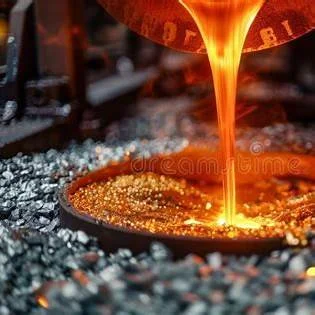
Choose from 3D sand printing, robocasting, or traditional patterns—depending on complexity and quantity requirements.4.Melting & Pouring
Precision melting of your specified alloy with spectrometric analysis to verify chemical composition.5.Heat Treatment
In-house heat treatment to achieve required mechanical properties for your application.6.Quality Inspection
Comprehensive inspection including LPI/MPI, dimensional verification, and material testing.7.Delivery
Finished castings shipped to your facility with complete documentation and certification.
Frequently Asked Questions
What is the minimum order quantity for low volume casting?
One Off Castings specializes in one-off and low volume production. We have no minimum order quantity - whether you need a single prototype or up to 500+ units, we can accommodate your needs. This flexibility makes us ideal for prototype development, bridge production, and custom applications.
How long does low volume metal casting take?
Lead times vary based on part complexity and material requirements. Typical low volume orders range from 2-6 weeks. Our 3D sand printing and robocasting capabilities enable rapid mold production for fast turnaround. Complex geometries or specialized alloys may require additional time.
What metals can you cast in low volumes?
We pour a wide range of engineering alloys including gray iron (ASTM A48, A278), ductile iron (ASTM A536), carbon steel (ASTM A216 WCB), stainless steel (ASTM A351 CF3M, CF8M), and aluminum (ASTM B26 319, A356). Our in-house heat treatment and quality control ensure consistent results across all alloys.
Do you offer reverse engineering for legacy parts?
Yes, we specialize in legacy part replication. Using 3D scanning technology, we can reproduce castings from existing samples, drawings, or scanned models—even when original documentation is unavailable. This service is invaluable for maintaining older equipment without expensive re-engineering.
What industries do you serve with low volume casting?
We serve diverse industries including oil and gas equipment, agricultural machinery, pump and valve manufacturers, mining equipment, power generation components, and custom industrial applications. Our engineering team understands the specific requirements of each industry.
Can you cast single prototypes for design validation?
Absolutely. Many customers use our prototype castings as production parts due to their high quality. We recommend discussing your validation requirements upfront so we can optimize the process for your specific needs—whether that's faster delivery or materials that will match your production specification.